Showing posts with label inflight magazine. Show all posts

Monday, June 2, 2014

Featured in InFlight Traveller Magazine: Paddleboarding in Bohol, whale-watching in Oslob

Inside cover image from InFlight Traveller Magazine by Ferdz Decena
"There was hardly a breeze but the trees seemed to sway and undulate with tiny sparks.  For like an hour, we sat on the kayak mesmerized by this phosphorescent mating dance of a thousand fireflies..."

Each assignment brings a new, fresh challenge and this one from last February courtesy of InFlight Traveller Magazine was no different.  Trading a few days of my regular online work for a momentary whiff of the outdoors I so badly missed, I found myself back in Bohol, equally curious about the province's condition months since the 2013 earthquake as well as the prospect of learning the rudiments of paddleboarding from no less than a local icon, Buzzy Budlong.  Buzzy kayaked from Saranggani to Pagudpud in 88 days as guide to Singaporean, Koo Swee Khoo, in 2009 so it's fairly easy to justify this curiosity.  Oh, never mind if I almost always lack sleep prior to an assignment (or any early morning appointment for that matter as I am used to working during the wee hours of the morning) and that this one is no different.

While I cannot reprint the feature here, I can perhaps look back and relate the salient points of the 4-day assignment -- of an impromptu paddling lesson all of 8 kilometers long on the very first hour at that, from the Banacon mangrove sanctuary to Jetafe on the northern tip of Bohol.  Of missing the sunrise on the beautiful beach of Bohol Beach Club because I was simply dog-tired from lack of sleep and the impromptu paddleboarding crossing.  Of discovering to my chagrin that my 5-year old drybag is overdue for a replacement after being submerged (with my Nikon camera inside) at the Abatan floodway during a morning butterfly tour excursion.  And of course, the highlight of our Bohol trip was witnessing a thousand fireflies some 8 kilometers from Maribojoc.  (The whale watching experience in Oslob was also nice save for the crowd and bedlam that ensued once the butandings were feeding).

Saturday, February 1, 2014

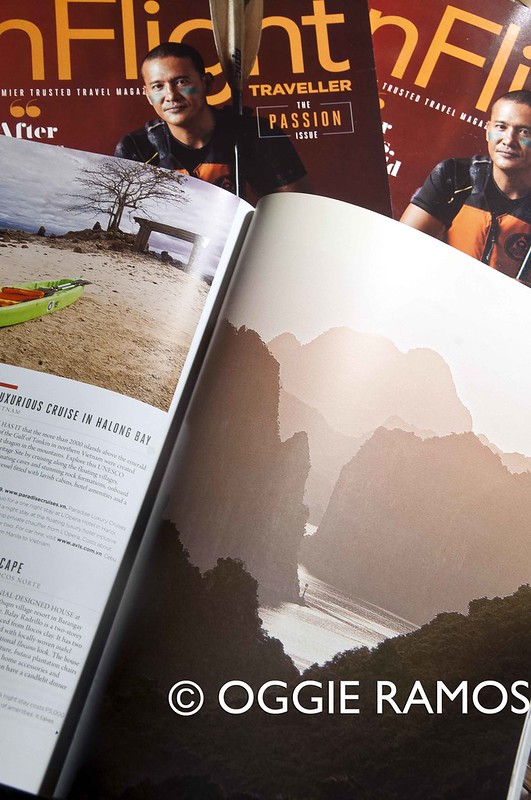
Picture Featured: Lagalog's Halong Bay image in InFlight Magazine January 2014 Issue

InFlight Magazine Jan 2014 - Halong Bay Featured
Beautiful karsts of Halong Vietnam
Buena mano for 2014, my Halong Bay capture is now featured in Inflight Magazine's current issue about romantic travel getaways.  May the year bring in more to come.

Thursday, December 27, 2012

2012 Postcards, Portraits and Memories

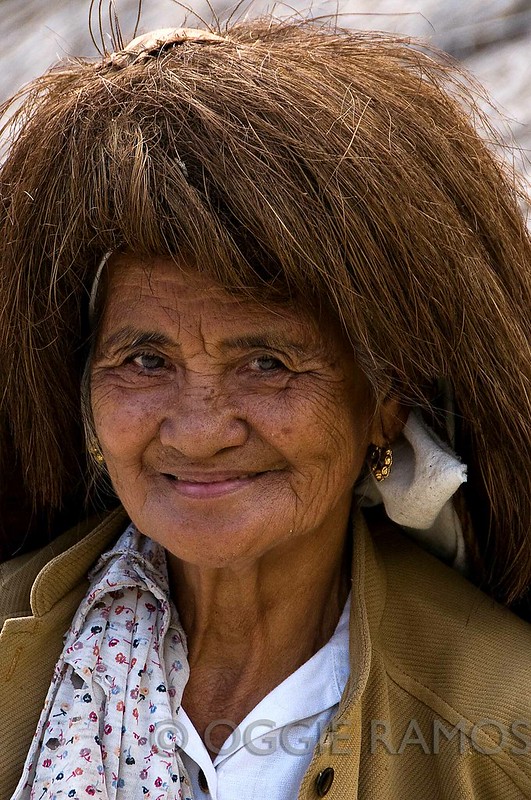
Batanes - Sabtang Chavayan Nanay Fely in a Vakul
Nanay Fely wearing the traditional Ivatan headwear, Vacul
I started the year on a reading binge, finishing a book every 3-4 days.  I had a health issue that required resting.  Ahh, reviewing this year meant coming to terms with having to strike a balance between looking for projects/earning a living and wanting to go out of town more.  I have not traveled as often as I wanted but that's life.  I may have not visited a lot of new places I haven't been to but the places I've revisited merited a second, even third immersion.

3-Island Batanes hopping. Batanes is a happy exception as it is my fifth time to go to this northernmost parts.  With God's providence, we were able to mount our second Batanes Backpack Photography Photo Tour this year, and a three-island hop at that.  The trip to Itbayat was a particularly memorable one with a tempestuous sea and a disembarkation at the other port, in Mauyen.  I distinctly remembered the air nippy for the time of the year, the well-stocked sari-sari store beside Nanay Cano's homestay, and the hike to Torongan Cave.

Thursday, December 6, 2012

Back to Guimaras Part 1: Return to Nagarao, the Island of the Tree Spirits

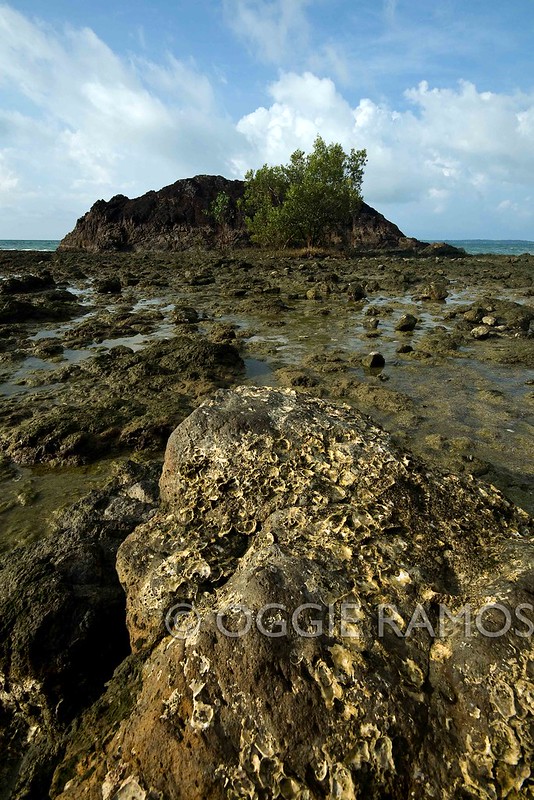
Guimaras Nagarao Southern Coast Curiosity
The beautiful, rocky shore of Nagarao in the early morning
It’s always changing, the sea and the view of the islands that lie beyond the waters. This is what Emma sees from the window of the main hall of the resort in Nagarao, one of the small islands off the Guimaras mainland. After 16 years spent on this 10-hectare Eden and seeing her children grow up, she has yet to outgrow her fondness for looking at the sea and the scenery that frames it – the stretch of fair, fine sand on the northern coast, the rocky shores to the south that reveal the rugged textures underneath at low tide, the silhouette of the forest trees on the western end. 

Isn’t living on a small island unnerving or lonely, I ask her. She confesses to being discomfited by the silence at first but in time, “you get accustomed to the peace and quiet.” Whenever she goes back to her hometown in Iloilo, she finds the place noisy and can’t wait to go back to Nagarao she says with a hearty laugh. 

Monday, October 29, 2012

Featured in InFlight Magazine onboard Seair Tiger Airways: The Isles of Thrills

Rapids action on Tibiao River
For this post, I am publishing a feature story I wrote that appeared in the October-November 2012 issue of InFlight Magazine which is available via subscription and onboard Seair Tiger Airway local flights.  Special thanks to my friend, Ferdz Decena of www.ironwulf.net, for allowing me to use his images which were also used for the physical magazine.

ABOUT OUR GUIDE.  Greg Hutchinson first came to the Philippines in 1986, the year of People Power, as an international Reuter correspondent.  He later took early retirement from Reuters to freelance and set up a beach resort in Boracy in 1989, and an adventure company, Tribal Adventure Tours (www.tribaladventures.com).  The company pioneered white water kayaking, rafting, seakayaking and photjournalism expeditions in the Philippines.  Hutchinson is averse to the tourism label, preferring to say that he's all about taking guests through a genuine "experience" that honors the country's rich tribal heritage.  Over a decade since setting up shop, he is still as excited as the early days about embarking on the next great adventure.  Hutchinson reveals his top adrenaline-boosting tours and activities.

Tuesday, August 28, 2012

Quezon Roadtrip Part 2: 3 Days, 3 Towns, 3 Islands - Mauban and Cagbalete

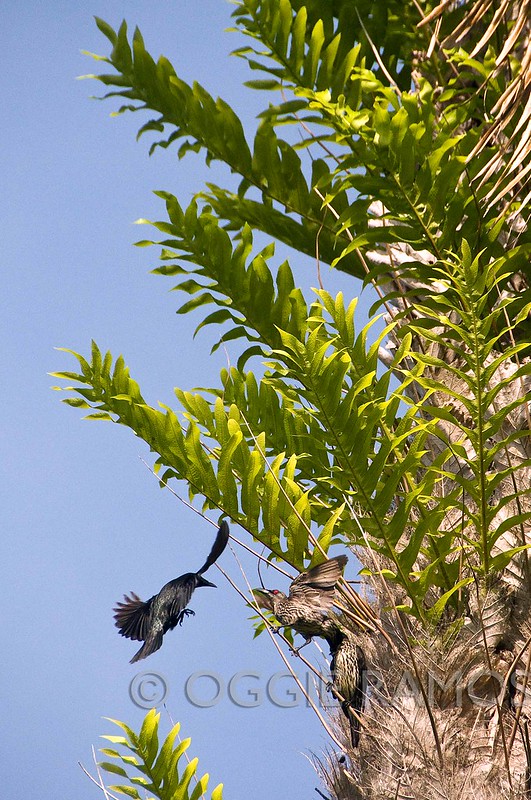
Quezon Cagbalete Birds and Fern
Birds we found trilling high above the coconut trees in Cagbalete
This is the second part of my two-part post series on the Quezon Province roadtrip/test drive of Kia Carnival assignment for InFlight Magazine.  In this post, we visit the town of Mauban and cross over to Cagbalete.  To read the first part of the series, just click this link.

Setting out for Mauban and Cagbalete Island.  The closest we got to following our itinerary was on our third day when we traveled further northwest to Mauban, just three towns away from Padre Burgos and close to Lucena City, the capital of Quezon Province. Arriving early ahead of schedule, we had to time to look for a place to have Pancit Habhab (fried noodles laced with pork ideally eaten with pinakurat, a strongly-flavored vinegar made from fermented coconut water), the quintessential Quezon dish. 

Friday, August 10, 2012

Villa Escudero: Getting Off the Grid, Plantation-Style

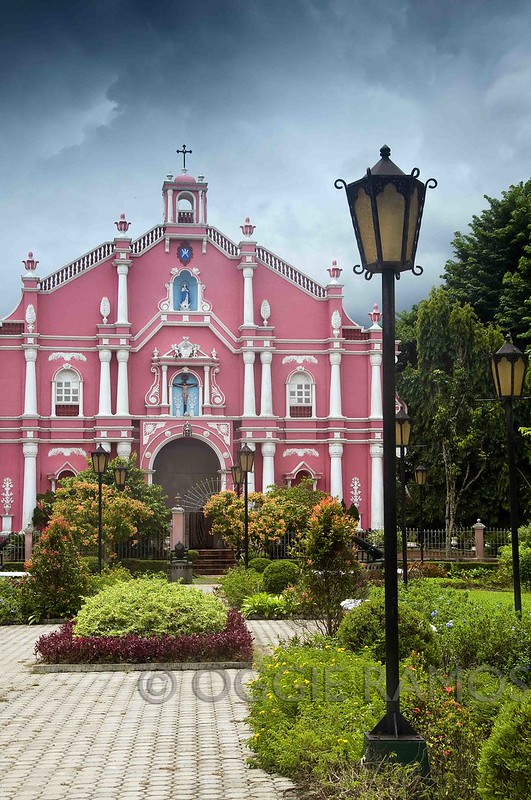
Villa Escudero Pink Museum and Grey Clouds III
Eye-catching Villa Escudero Museum
A short backstory: I was sick with fever two days running before this assignment.  But the idea of leaving the city behind even for just a day seemed like what the doctor ordered.  Surrounded by nature, it seems that recuperation and restoration just came natural, even giving me the strength to spend more time outdoors, even paddling down the river in the late afternoon.  In any case, here's the review that appeared in the July - August issue of Inflight Magazine.
 
The location.  Villa Escudero in Tiaong, Quezon is about two-hour's drive from Manila.  The estate, founded in the 1880s by Don Placido Escudero and his wife, Doña Claudia Marasigan, used to be a sugarcane plantation but was converted into a coconut farm in the early 1900s.  It still is a working farm but now serves as a tourist destination.

Friday, May 11, 2012

Backpacker Holidays: Sagada, Banaue and Ilocos

Sagada - View of the Town on the Road to Besao II
View of the town proper of Sagada
For this post, I am reprinting a feature article based on an interview done by Monica de Leon, the managing editor of Bakasyon, care of InFlight Magazine, which appeared in the April-May 2012  issue.   I decided to reprint it since it may help some people researching the Internet for templates for a backpacker holiday.  I added some more bits of information which were not included in the original article due to space limitation as well as links to past posts that may be of help to the reader.

Note: Prices quoted are based on payments made during recent trips and are subject to change, especially after rounds of oil price and fare hikes.  The same goes for inn rates so you may want to check the websites of the respective establishments.  I guess that in some cases, the sum totals can be lower but as an advocate of fair travel, I personally believe in paying the locals fairly especially when it comes to fees that benefit the communities as well as help support the local economy.

See Sagada, Banaue or Ilocos from P6,000, says travel blogger Oggie Ramos of lagalog.com.

Saturday, February 11, 2012

Wild on good value? Try Wild Orchid in Angeles

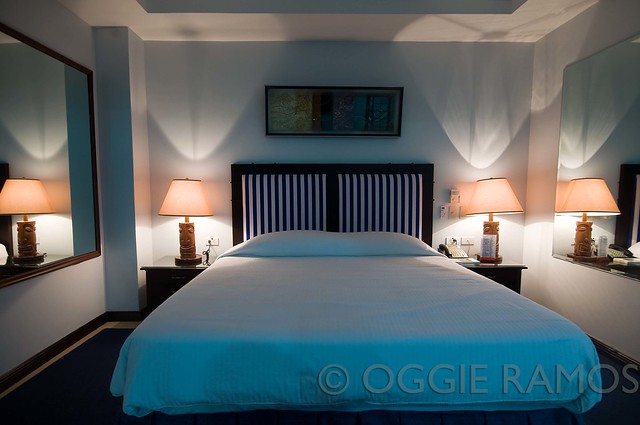
Angeles - Wild Orchid Family Room Bed and Mirrors
Fit for the whole family
A rainshower, 42-inch LCD TV, free Wifi, and delicious local breakfast give most people to look this one up.

Location.  At the fringe of the row of hotels, inns and lodges along A. Santos in Balibago, Angeles City.  About 10-15 minutes away from the Clark Freeport Zone.

Rooms.  The resort has 55 airconditioned luxury rooms.  A typical family room (P5,200 or about US$121) has a balcony that overlooks the pool and can easily accommodate six to eight people.  The room's toilet and bath is nicely fitted with a rainshower.  There's a 42" LCD cable TV and DVD player.

Saturday, February 4, 2012

From one mountaineer to another, waxing poetic over mountains and why I hike them

arayat jump off
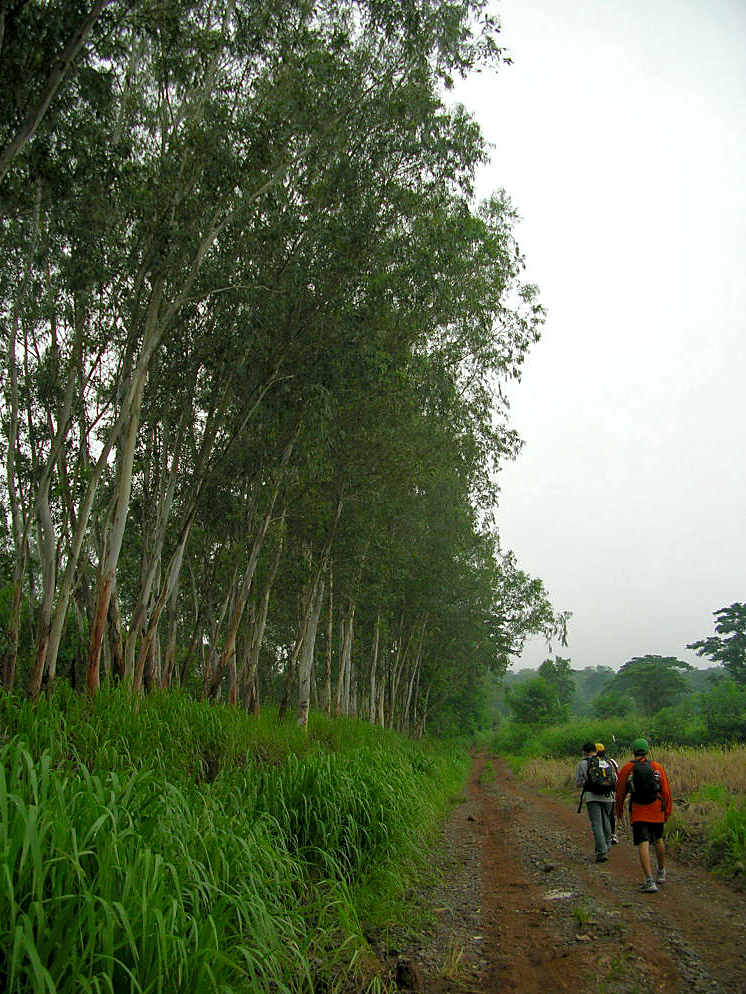
On the trail to Mt. Arayat
Mountains are the means, the man is the end.  
The goal is not to reach the tops of mountains, but to improve the man.
                                                                                   Walter Bonatti, Italian Climber

Oh it almost always happens before an assignment. I pack early willing myself to sleep ahead of my usual bedtime only to toss and turn until it's just an hour or two before it's time to leave.  Our first order of the day was to interview and shoot mountaineer Nesty Zapanta for InFlight Magazine just as the sun was painting Mt. Arayat in Pampanga with warm hues of yellows, the dew just settling on the grass and setting off a sweet scent through the forest.  What we didn't expect was that we actually had to hike midway to the mountain to get a magazine-worthy vantage point.

I was surprised that even if I was lugging my camera bag and netbook, I didn't mind the hike.  In fact, I enjoyed the early morning wake-up exercise.  Probing a mountaineer like Nesty, a rather stoical-type who works as sports coordinator at the Angeles City Municipio by day and climbs mountains during weekends with his buddies at the Angelenos Mountaineering Society (AMS), was admittedly, a harder task.  I guess it is quite common among some mountaineers to keep quiet and let their feet do the talking.  What I didn't expect was that interviewing a fellow mountaineer will make me mull over the reasons why I hike myself.

Saturday, January 28, 2012

Racing on the well-beaten path: An interview with an off-roader

Clark Speedway - Jojo Javier's 4x4 Dirty Details
Getting down and dirty on the Clark Speedway dirt tracks
 "Whatever the road smells of, that's how you'll smell.  If a carabao used that mudhole you crossed to bathe himself, you'll smell exactly like that carabao." 

Off-roader Jojo Javier offers this pragmatic advice to wannabe off-road racers who think the sport is all about fun and glam. Wearing my writer's hat for InFlight Magazine, part of my assignment was interviewing a curious mix of people from Clark, Pampanga who have adventure as their calling card. From drifting with lateral driving champion, Audel Sison, I met up with Jojo Javier on the tracks of Clark Speedway, deemed among the toughest in the country. 

Curiously, Jojo's background isn't in motorsports but scuba diving, skydiving and practical shooting. He wanted a diversion that would take him outdoors so he bought his first 4x4 many years ago. But it would take a couple of years before the competitive bug bit. He recalls his first race, "muntik na akong umurong nang nakita ko yung race track kasi yung table top is around 15 feet" (I almost pulled out of the race when I saw the race track because the table top obstacle is 15 feet high). In a sport where guts seem to be the high-octane fuel that propel drivers to brave the races, does anything ever faze him? "Recently dun sa national dumptruck challenge, meron talagang tumataob nang paharap" (In the recent national dumptruck challenge, there were vehicles that overturn on their front end which is scary). 

Sunday, April 11, 2010

Seair InFlight: 5 Days in Cebu, Part 1

If you love the beach life and the convenience of the city, this island in the south is for you, says Andrea Pasion.

WHY GO NOW.  Cebu City is Manila without the mayhem, offering the conveniences of city living with its upscale shops and restaurants, and the joys of beach life, with many resorts just a few minutes drive away from the city center.  April is perhaps the best time as any to go when the summer season is just beginning to peak. You get to avoid the tourists, crowds, and heavy traffic during the frenetic January Sinulog street-dancing festival season and you can still get good deals in resorts and hotels. April is also the season for Philippine mangoes, reputed to be the sweetest in the world.

GET YOUR BEARINGS.  The very hub of the Visayas, Cebu is an economic center second only to Manila. An hour’s flight from Manila, Cebu is the gateway to the islands of Visayas, and the kick-off point to the islands of Bantayan and Malapascua, both diving destinations. On a clear day, it is possible to see Bohol from your hotel room, while Dumaguete and Suiquijor, like most other places in the Visayas, are just ferryboat rides away.  Designer Kate Torralba calls this city “the Milan of the south”, a center for international quality furniture design and fashion.

The city is home to such designers as Kenneth Cobonpue (www.kennethcobunpue.com), Customwood Fine Furniture (+6332/ 236 8603, [email protected]), Butch Carungay of Avatar accessories (www.avatar-style.com, and 2/L Greenbelt 5), fashion designers Jun Escario (www.junescario.com) and Kate Torralba (www.katetorralba.com, 2/L Greenbelt 5).

CHECK IN.  If you’re feeling like the high roller, the 561-room Waterfront Cebu City Hotel & Casino in Lahug, with its two casino floors open for 24 hours, is your kind of place. The hotel’s castle-like architecture stands out in the city’s skyline, and there’s no mistaking the Vegas-like ambiance upon setting foot in its grand lobby. For both locals and tourists, the hotel’s duty free shop is also a draw. All rooms here are fully equipped with cable TV, IDD, mini bar, fridge, broadband Internet access (there’s free WiFi but it’s a bit spotty on some floors). • Rates start at about US $100 (about P5,000) a night for a standard room to $950 for the Penthouse suite, once booked by a foreign dignitary for all of 219 nights, at a discounted P40,000/night. • Location: 1 Salinas Drive, Lahug, Cebu City  Tel: 1-800-10-WFRONT8 (for PLDT lines), +6332/ 232 9000, +632/ 687 0888 • Email: [email protected], [email protected]www.waterfronthotels.com.ph 

• The 329-room Marco Polo Plaza Cebu is built on a hill, with a view second only to Tops, Cebu’s famous hilltop lookout site. Check out the hotel’s Blu Bar and Grill, an open-air churrasco bar at the penthouse level, where having a drink a thousand feet above sea level is complemented with a breathtaking view of Lahug. The hotel is a favorite of the city’s affluent families, including Cebu Governor Gwen Garcia and Amparito Lhuillier. It is about a 20-minute drive from the city center. • Rooms start at P5,200 per night, including breakfast. • Location: Cebu Veterans Drive, Nivel Hills, Apas Cebu • Tel: +6332/ 253 1111; Manila toll-free 8888-168 • Email: [email protected]www.marcopolohotels.com

• The Plantation Bay Resort is about 30 minutes away from the city center, making it ideal for holidaymakers wanting a weekend or short break. Its 11.4 hectares of seawater lagoons and fresh water pools make it popular for families with kids. It’s also known for its spa, Mogambo Springs. Designed like a Japanese village with its own water falls and a rejuvenating hot spring Mogambo completes the illusion of a complete getaway. Plantation Bay is the only Filipino resort included in the Conde Nast Traveller’s Reader’s Choice Award Gold List for 2009 for one of the best places to stay in Asia. • Rooms rates start at $200++ on peak season, $150++ on off-peak, with breakfast for two.• Location: Marigondon, Mactan Island • Tel: +6332/ 340 5900, +632/ 844 5024 to 25 • Email: [email protected]www.plantationbay.com

• The resort of choice of honeymooners, celebrities and politicians, like Manny Pacquiao and the ASEAN heads of state, is the 547-room five-star Shangri-La’s Mactan Island Resort and Spa, which has the longest stretch of beach on the island at 350m, multi-level pools, the famous Chi Spa Village, and service you’ll remember long after your stay. It’s hats off to the concierge here.  When we asked for a box to pack a couple dozen packs of Shamrock Otap biscuits, danggit dried fish, and 7D mangorind candies from the 7D factory, the concierge sent three different sized boxes to the room for us to choose from. The concierge also made sure the lechon or roast suckling pig we ordered, which arrived just in time for us to catch the shuttle bus, was appropriately packed and tagged. • Rates at Shangri-La start at P13,500/night. • Location: Punta Engaño Road, Lapu-Lapu City, Cebu • Tel: +6332/ 231 0288 • Fax: +6332/ 2311688 • Email: [email protected]www.shangri-la.com

Rico’s Lechon, reportedly “Cebu’s best,” sells lechon at P2,500-P5,000. It’s on Hiway 77, Talamban, Cebu. Call +63917/ 407 2033 or +6332/ 344 0119 or email [email protected] to order.


 Culled from the Seair InFlight Magazine article, "5 Days in Cebu", April 2010 Issue • Words by Andrea Pasion, art direction by Jocas A. See, photography by Oggie Ramos • Many thanks to our insider, designer Kate Torralba for her insights on her hometown of Cebu

Next: Part 2 - Historical Cebu

Wednesday, December 30, 2009

From Bagan to Batad, for InFlight and Mabuhay, Lagalog says thanks for 2009

The year 2009 brought changes as well as blessings to Lagalog. It's a privilege to be a regular contributing photographer and feature writer for Seair InFlight Magazine. On two occasions, my photos have also been featured in Philippine Airlines' Mabuhay Magazine. I'm equally blessed to go places.

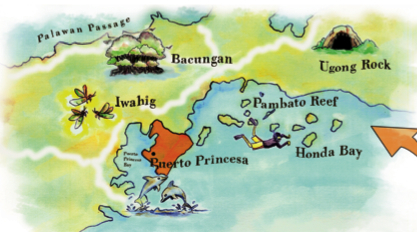
Ecotouring Puerto Princesa. It's my first time to visit the capital of Palawan and it was exciting to cover new ecotours for readers of InFlight Magazine. From the firefly-filled nights at Iwahig River to exploring Ugong Rock and from paddling down Bacungan River in the early morning to eating crabs at Cafe Arturo, it was a swell assignment alright.

Going solo in Myanmar. I wasn't able to travel as often this year but being able to solo backpack again after many years, this time to Myanmar, is a great blessing. Venturing to Mount Popa by mistake, seeing Shwedagon Paya during sunset, going on an overnight bus to Mandalay, and being nearly stranded by the street rallies in Bangkok were all very memorable to me.

Visiting Malacañang. Ivan Man Dy was very gracious in including me in his tour of the San Miguel District and the Malacañang Museum. It's not everyday that you can visit this tightly-guarded place, bring a camera and get away with it. Not to mention, being able to meet the president. Add to that, being able to eat what is probably the best paella in town at Cocina de Tita Moning.

Idyll Imugan. Travel plans had to wait until after I resigned from my job of eight years to go freelancing. And Imugan in Nueva Vizcaya is a beautiful place to rest my weary mind and spirit. It's revitalizing to be the only tourists in this tranquil farming town that calls to mind Baguio in a more pristine state, from the towering pine trees to the chilly clime, aside from the beautiful falls.

Surfing Puraran. Going to Catanduanes while Metro Manila was under typhoon signal number three was a gamble but seeing the surfing town of Puraran during the off-season was a wonderful experience. Ditto visiting the churches and falls around Virac. While we didn't get to try our hand in surfing, seeing the surf and some surfers in action beat surfing the net anytime.

Fish talk. Revisiting Manila Ocean Park was both a disappointment and delight. The tunnel was no longer that impressive but the Jellies display plus the food at Makansutra, not to forget the Manila Bay sunset were definitely delightful.


Revisiting Taal Town. The last time I was here was about five years ago, when I didn't even had a compact point and shoot camera. This time, I didn't even want to miss a detail as we explored the magnificent San Martin de Tours basilica and the charming Our Lady of Caysasay.

Hiking Banaue and Batad. In between assignments, I got the chance to visit the highlands. I must admit I'm out of shape to hike lengthily but there's something about breathing the fresh air, feeling the chill in your bones, and seeing the mountains and terraces that give tired feet and bursting lungs fresh impetus to go on.

Starry-eyed in Pampanga. I've always been wanting to shoot the giant parol festival of Pampanga and this year, I was able to do so, sans media/VIP passes. Needless to say, I was impressed and left San Fernando with stars, literally, in my eyes.

Thank you to all my travel companions; thanks for friendships made and kept on the road; thanks for experiences to treasure and learn from; and to God for making these journeys possible. With God's Divine Providence, Lagalog looks forward to a more blessings- and travel-filled 2010. And I wish you, dear readers, the same. God bless!

Thursday, December 3, 2009

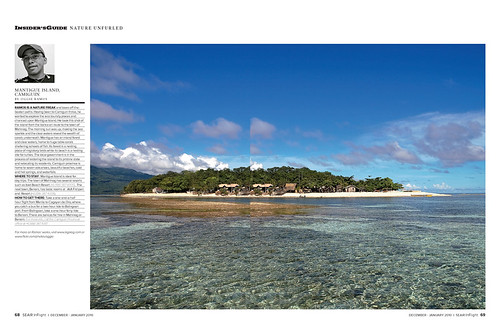
Seair InFlight December 09 - January 2010 Issue: Oggie Ramos' Mantigue Island, Camiguin

Ramos is a nature freak and loves off-the-beaten paths. Having been to Camiguin thrice, he wanted to explore the less touristy places and chanced upon Mantigue Island. He took this shot of the island from the banca en route to the town of Mahinog. The morning sun was up, making the sea sparkle and the clear waters reveal the wealth of corals underneath. Mantigue has an inland forest and clear waters, home to huge table corals sheltering schools of fish. Its forest is a nesting place of migratory birds while its beach is a nesting site for turtles. The local government is in the process of restoring the island to its pristine state and relocating its residents. Camiguin province is home to seven volcanoes, beautiful beaches, cold and hot springs, and waterfalls.

Text and photo by Oggie Ramos. To see more breathtaking sceneries by photographers Allan Barredo, Bien Bautista, John Callahan, Erick Dantoc, Iah Isip, Jaypee Martinez, AJ Ordoñez, Ruel Pine, and Gutsy Tuason, get your copy of Seair InFlight Magazine. Call (632) 840-2803 for subscription.

Monday, October 19, 2009

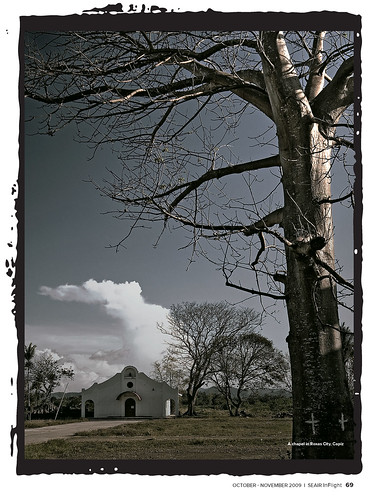
Seair Inflight Tales of the Unknown: Capiz • Featured in InFlight Magazine Oct-Nov 2009

Roxas Chapel by the roadsideThe province of Capiz, now known as Roxas, has a love/hate relationship with its reputation as a home to the aswangs, a kind of hard-to-define vampire/shapeshifter combo that haunt the nights.  Aswangs are ordinary mortals who inherit the bloodline that enables them to transfigure into bats or a scary black dog. They also take many different forms, such as the manananggal, which reportedly splits into two, its top half flying off into the darkness to suck the blood of a human prey, and its bottom half,  ready and waiting for the return of its mobile half. 

Natives born in so-called aswang provinces such as Antique and Capiz rely on old remedies such as garlic and secret religious mantras prayed in silence in the presence of an aswang to protect them from harm. Children are told never to show fear and never to gaze into the eyes of a suspected aswang. Smacks of the old Dracula tales? There is a little twist. If you do encounter a temporarily dismembered aswang bottom half, sprinkle the stump with salt to kill off your aswang. From 2004 to 2006, Capiz inaugurated the Aswang Festival in late October, poking fun at the province’s reputation as a hotbed of aswang activity. The Church and some government officials did not see humor in it and the festival was scrapped in Juy 2007. Recently, a Canadian film crew traveled to Capiz to film a docu-movie called ‘Aswang: A Journey into Myth’, which shows that aswangs are still a hot topic.

 Culled from Seair InFlight Magazine, October-November 2009 Issue • Text by Chip Childers, art direction by Jocas See, photography by Oggie Ramos

Saturday, April 11, 2009

Ecotouring Puerto Princesa: Bacungan River

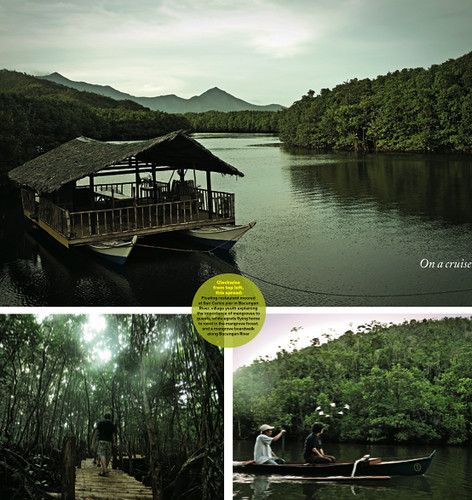
On a cruise down Bacungan River in Barangay Bacungan, home to hundreds of hectares verdant mangrove forest, village wives and their family members prepared and served lunch to tourists on board, while the village youths took turns giving a short lecture with visuals about mangrove ecosystems. It’s not exactly what you’d expect out of a holiday package, but this was no ordinary tour.

Those organizing the tour are residents of Bacungan, some 20 kilometers north of Puerto Princesa City, capital of Palawan. Most of them had been involved in cutting down the very mangroves they are now protecting and showing off to visitors.

Under private sector ABS-CBN Foundation's Bayanijuan project, local folks are finding new ways of earning a living the eco friendly way. The foundation has helped organize communities and provides funds for equipment to get locals started. Non-governmental organizations (NGOs) are also supporting similar projects. As a result, five eco tours, including the Bacungan River tour, are successfully being operated by local people.In Bacungan, residents abandoned mangrove cutting soon after the Environmental Legal Assistance Center (ELAC), an NGO engaged in environmental advocacy in Palawan, started a series of talks to villagers about the adverse effects of destroying the mangroves, a rampant practice because profit can be had from selling mangroves as charcoal. In 2003, ELAC’s efforts were helped by the government when it awarded the Bacungan Coastal Development Residents’ Association a 25-year government lease covering all 379 hectares of mangrove forests. This award put the association in charge of managing the forest and protecting it from illegal activities.

The break in mangrove-cutting activities – hopefully a permanent one – encouraged white egrets to come back and resulted in more fish in the river, according to Agustin Mapa, former charcoal gatherer who now heads the Bacungan Coastal Development Residents’ Association. Building on ELAC’s organizing efforts, Bayanijuan helped the community develop the eco tour.

One of the five eco tours now on offer, the mangrove cruise tour itself is an enjoyable two-hour travel with a stopover at an 85-meter boardwalk where you get to see the mangroves up close. The cruise is on a floating restaurant, a platform mounted on two boats, catamaran-style, towed by an outrigger boat. Tourists get on the boat in Sitio San Carlos, welcomed by young children in native costumes performing local folk dances while a string band played Cuyunon music. A sachet of insect repellent to ward off sand fleas known to swarm in mangroves were passed on to everyone. Lunch consisted of jackfruit salad, chicken soup, fish stew with fresh tomato dip, crabs caught from the river, and rice in banana leaves. The serenity of the mangrove river lulled some of the guests to sleep during the lazy Sunday afternoon cruise.

The tour costs P3,500 for a minimum of 10 people, and includes native snacks and fresh buko (young coconut). Buffet lunch is an additional P150, a bargain for such a feast. Every trip, 14 households earn extra income from organizing the tour. Everyone from the children to the parents help out in cooking, entertaining, and briefing visitors. 

(This is part 4 of the cover feature, "The Green Dream" by Yasmin Arquiza for Seair Inflight Magazine, April-May 2009 issue. Art direction by Jocas See • Photography by Oggie Ramos)

Wednesday, April 8, 2009

Ecotouring Puerto Princesa: Iwahig firefly (and nature) watching

At sunset, I joined another eco tour. This one was down Iwahig River, about 20 kilometers south of the city proper. It’s ran by the Iwahig Community Ecotourism Association, organized by Bayanijuan last year. More than a dozen youth, all children of the Iwahig Penal Colony’s employees, are now earning up to P1,000 a month in running the tours on rotation basis. 

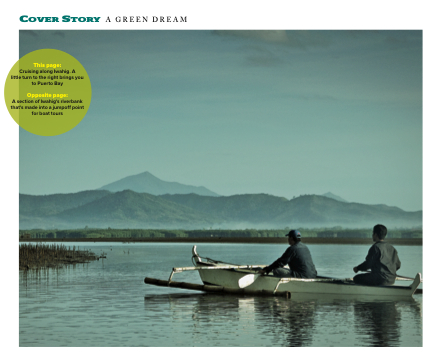
A section of the riverbank near the Iwahig bridge has been cleared for the tour and there are stone pathways and grass huts as well as a pavilion for big tourist groups. As soon as it gets dark, tourists are asked to put on insect repellent, life vests and a salakot (native hat) before boarding the paddle boat. Our first stop was to view nilad, a favorite host plant of fireflies, along with nipa and tabigi, two other mangrove species, according to our boatman. Swarms of lightning bugs lit up Nilad, a wondrous sight to behold. Manila was named after this same plant which once thrived in its waters. I started to imagine what Manila Bay looked like when these mangrove trees still lined the coast. We spotted a few more isolated trees where the lightning bugs flashed on and off, the quiet swish of the oar in the water soothing the senses on a moonless night. Finally, we reached the high point of the tour – an island where hundreds of fireflies glittered in the trees. They twinkled like Christmas lights in the dark night, echoing the twinkling of the stars in the sky.The two-hour cruise costs P600 per boat, which is good for three people. Rice cake snacks are included, along with an interpretative tour of the mangroves. In the dark, however, it is difficult to appreciate the boatman’s spiel about the mangroves as you can hardly see anything. Guests may reserve buffet dinner in advance for P150 each. We were treated to a local delicacy called tamilok, a bivalve from rotten mangrove wood whose body resembles a worm. It’s supposed to taste like shellfish, but this time I passed. 

(This is part 3 of the cover feature, "The Green Dream," by Yasmin Arquiza for Seair Inflight Magazine, April-May 2009 issue. Art direction by Jocas See • Photography by Oggie Ramos)

Saturday, April 4, 2009

Ecotouring Puerto Princesa: Ugong Rock

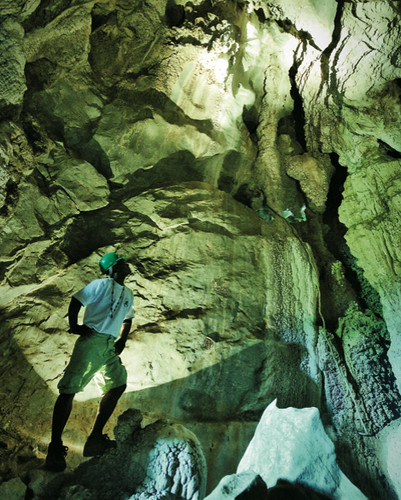
The most challenging eco tour in our itinerary was a cliffhanger-type adventure up a limestone outcrop near the popular Puerto Princesa Subterranean River National Park, which boasts of the longest underground river in the world. We drove some 60 kilometers northwest of the city proper, some of it on unpaved roads, to reach the village of Tagabinet. Tour guides in mint-green uniforms, most of them women, welcomed us with bead necklaces made of seeds.

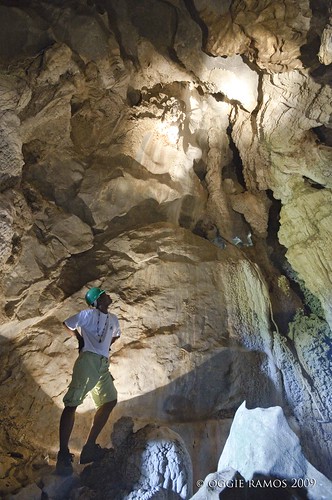
The Tagabinet Community Tourism Association, which ELAC helped organize in 1999, run the tour. Bayanijuan helped with the project, providing safety gear for climbers and funds for visitor facilities. We started the tour by gearing up, donning hard hats and rubber-lined gloves so we could get a better grip of the ropes and rough surfaces. I had some problems with the helmet, which skewed my eyeglasses, without which my eyesight was pretty much useless in the dimly-lit caves. We entered through a dark passage, climbing and wove our way in and out the rocky labyrinth, stopping for a moment midway up to tap the vertical formation Rock that made a drum-like sound (literally, ugong). At one point, we had to rappel up a sharp incline, and in some places, squeeze our bodies through sharp crevices. When we reached the peak, a most pleasant surprise awaited us.“I’m impressed!” was all I could blurt out when I saw the view deck perched on the ledge. Our lady guides were with cold towels in hand. We savored the panoramic view of rice fields, limestone cliffs, forested hills, and Mount St. Paul while the guides told us how they built the view deck by hauling up each piece of bamboo up by pulley and manually, all in 15 days!
Back in the valley, a glass of calamansi juice with honey and a slice of cassava cake were a welcome treat after the climb. It takes about 45 minutes at an easy pace to reach the top, estimated at 80 meters. Fees are P100 per person; 60 per cent goes to the tour guide while the rest is remitted to the association. Bayanijuan project manager Gerry Ortega says they are hoping to capture the tourist market going to the Underground River. When there are no guests, the tour guides weave grass baskets that are sold as souvenirs. 

(This is part 2 of the cover feature, "The Green Dream," by Yasmin Arquiza for Seair Inflight Magazine, April-May 2009 issue. Art direction by Jocas See • Photography by Oggie Ramos)

Thursday, April 2, 2009

Ecotouring Puerto Princesa: Pambato Reef

Our final destination was another overlooked spot in the tourist trail. Island hopping at Honda Bay is a must-do in any visit to Puerto Princesa, but boatmen often just skirted the shallow offshore reef near Lu-li Island, unaware of its potential for snorkeling.

Gerry worked with another group organized by ELAC, the Honda Bay Boatmen’s Association, in developing tourist facilities near the coral reef they called Pambato (contender). It has been dubbed a “mini-Tubbataha” so I had to see for myself whether it could really compare with the World Heritage Site in the Sulu Sea.
The reef was teeming with live corals – a field of mushroom corals, a cluster of table corals, and branching corals everywhere. But I was disappointed to find only a few fish, not even a clownfish near the sea anemones. There were parrotfish, surgeonfish, and some angelfish but it was definitely nowhere near the diversity of Tubbataha.What makes Pambato Reef a delight, however, is the floating platform with a roof in the shape of a hawksbill turtle. Made of fish nets and metal pipes, the artistically designed structure provides good air flow and is sturdy enough to withstand a typhoon. Bamboo chimes flutter in the wind, and a matching baby turtle floater is used to ferry swimmers. The entrance fee of P50 per guest adds to the boatmen’s income. 

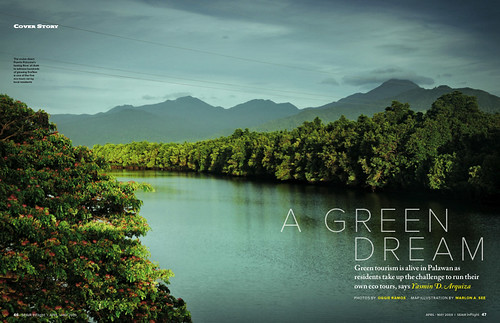
SWEAT EQUITY - In every eco destination, local partners put in labor and creativity as their “sweat equity” in developing tourist facilities, says Bayanijuan's Gerry. Major supporters of the venture are the department of Tourism, which provided P1 million, and the city government, which gave an additional P2.5 million. Gerry also tapped the local academe and environment experts for the educational modules, the City Tourism Office for training tour guides,and the Palawan NGO Network for marketing the tours. “We became the catalyst,” said Gerry. What’s unique about Palawan is that it is easier to collaborate among groups in working towards environmental goals. High awareness about ecology among residents is also helping the project achieve its triple bottom line: to benefit the community, protect the environment, and make the guests happy. 

(This is part 1 of the cover story, "The Green Dream," by Yasmin Arquiza for Seair Inflight Magazine, April-May 2009 issue. Art direction by Jocas See • Map art by Marlon See • Photography by Oggie Ramos)

LinkWithin

Related Posts with Thumbnails